
Boilers 5 min read26 January 2026
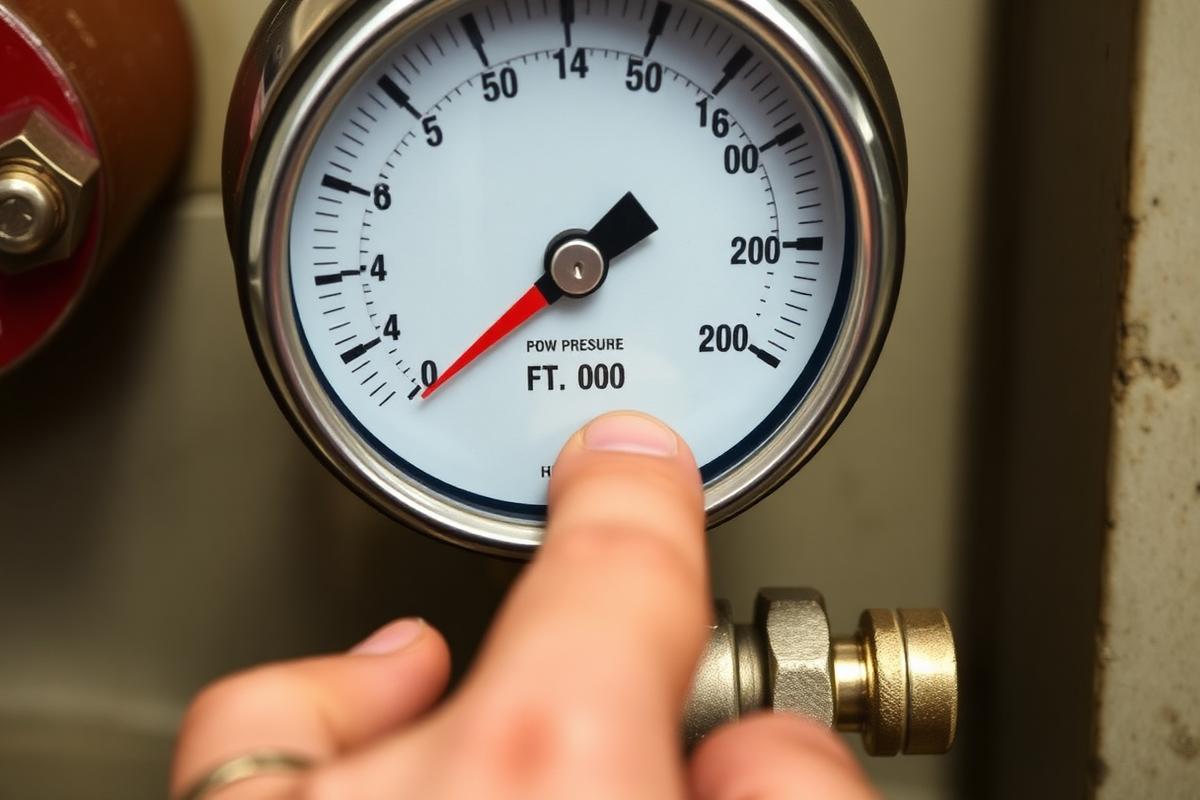
A sealed heating system should hold its pressure for months. If you are topping up weekly, water is escaping somewhere — and finding where is the whole job.
The five real causes of pressure loss
In order of how often we find them on Glasgow callouts:
- A weeping radiator valve or towel rail joint, often hidden under flooring
- A failed pressure relief valve discharging through the outside pipe
- An expansion vessel that has lost its air charge
- A pinhole leak in buried pipework, common in older sandstone properties
- A failed automatic air vent letting water escape as vapour
How to repressurise safely
Turn the boiler off and let the system cool. Open the filling loop slowly until the gauge reads between 1.0 and 1.5 bar cold, then close both valves fully and remove the loop if it is a detachable type. Never leave a filling loop open — it can over-pressurise the system and dump water through the PRV.
When it needs an engineer
If you are topping up more than once a month, if water is running from the small copper pipe outside, or if pressure spikes above 2.5 bar when the heating fires, stop and call us. Those three symptoms point to a PRV or expansion vessel fault that will keep repeating until the part is replaced.
Need help with this?
We handle this work every week. See Heating & Boiler Services in Glasgow or browse all our services.
Frequently asked questions
What pressure should my boiler be at?
Around 1.0–1.5 bar cold for most domestic systems; it will rise slightly when hot.
Is low boiler pressure dangerous?
Not usually dangerous, but the boiler will lock out and you will lose heating and hot water.
Can you find a hidden leak?
Yes — we use pressure testing and thermal tracing to locate leaks under floors before lifting anything.
Related reading
Book a local engineer
Dealing with this problem right now? These pages cover pricing, response times and the exact jobs we do in each area.
More articles
 Boiler Repair in Glasgow: 10 Faults We Fix Every Week
 Burst Pipe: The First Five Minutes Matter
 Power Flushing: When You Actually Need One