
Gas Safety 5 min read13 April 2026
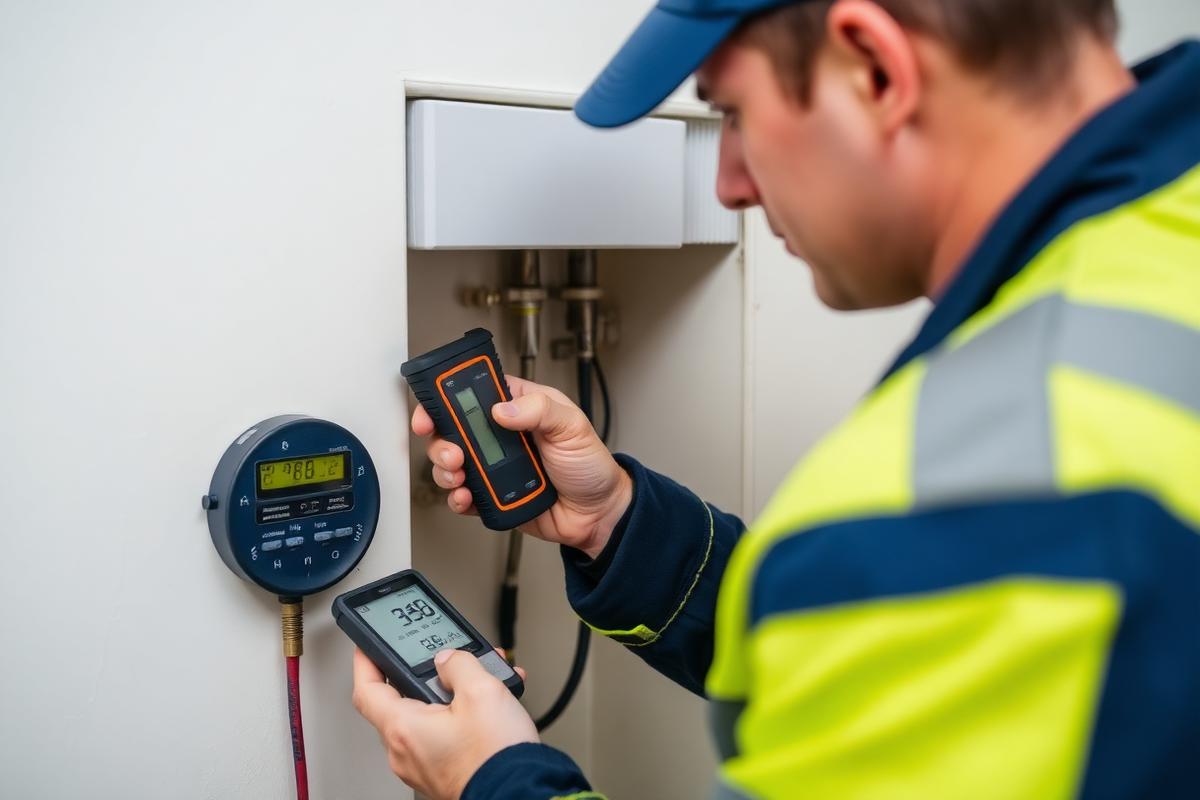
Whether you are a landlord meeting a legal duty or a homeowner wanting peace of mind, a gas safety check follows a set procedure carried out by a Gas Safe registered engineer.
What gets inspected
- Gas tightness test on the installation pipework
- Meter and emergency control valve condition and accessibility
- Each appliance: operating pressure, gas rate and burner condition
- Flue integrity and flue flow, including spillage testing where relevant
- Ventilation provision to each appliance
- Safety devices and flame supervision operation
- Physical stability, fixings and appliance connections
Understanding the classifications
If a defect is found, the engineer records it as Immediately Dangerous, At Risk or Not to Current Standards. ID and AR appliances are turned off with your permission and labelled. NCS means the appliance is safe to use but does not meet current standards, and it is recorded on the paperwork.
How long it takes
A single-appliance property is usually thirty to forty-five minutes. A property with a boiler, a fire and a cooker takes longer. We issue the certificate the same day by email and, if needed, in paper.
Need help with this?
We handle this work every week. See Domestic Gas & LPG in Glasgow or browse all our services.
Frequently asked questions
Is a gas safety check the same as a service?
No. The check confirms safety; a service cleans and maintains the appliance. We often do both on one visit.
Do homeowners need one?
It is not a legal requirement for owner-occupiers, but it is strongly recommended annually.
How fast can you attend?
Usually within a few working days across Glasgow, sooner for urgent cases.
Related reading
Book a local engineer
Dealing with this problem right now? These pages cover pricing, response times and the exact jobs we do in each area.
More articles
 Landlord Gas Safety Certificate (CP12) Explained
 Carbon Monoxide: Symptoms, Alarms and Placement
 Gas Cooker and Hob Installation Rules